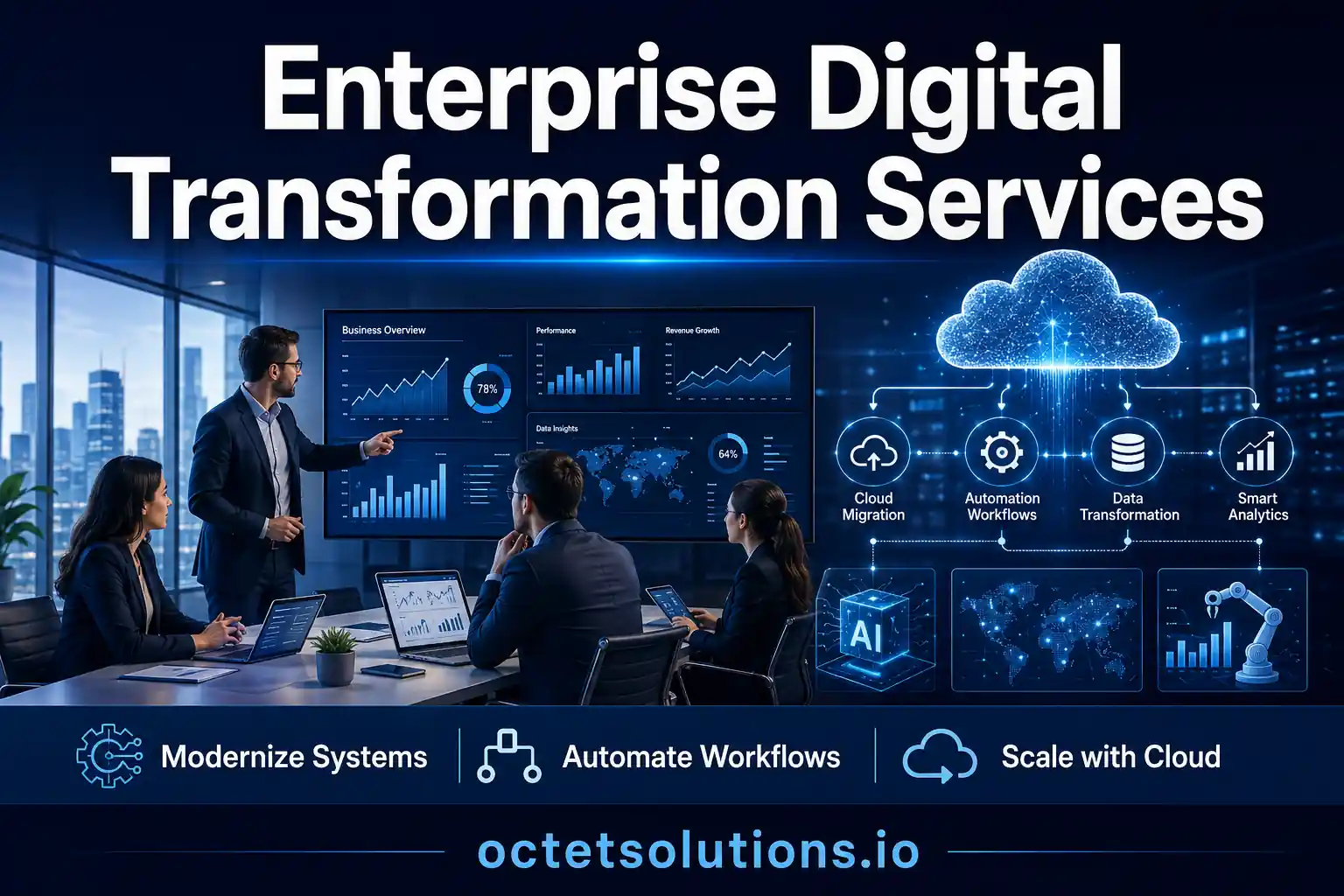
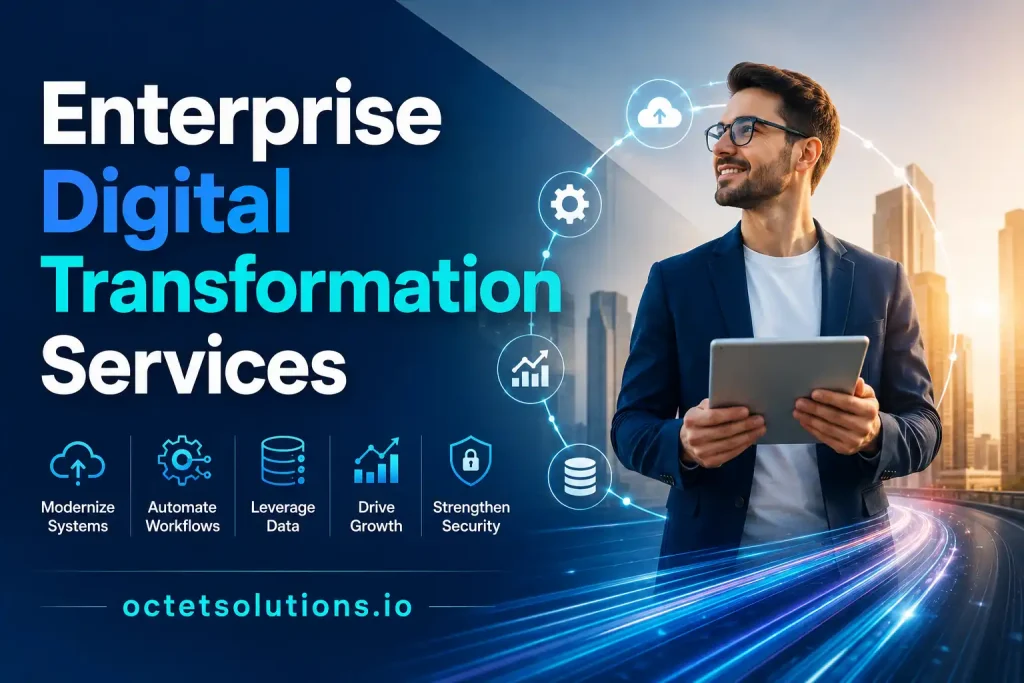
Enterprise Digital Transformation Services are no longer something companies can afford to ignore. Whether you’re running a mid-sized business or managing a large corporation, there’s a lot of pressure and emphasis on modernising in the business world. And this pressure could be coming from every direction, like it might be customer expectations, competition, operational costs, or market speed.
However, these services are about changing how your business runs at its core. We’re talking about rethinking your systems, your workflows, your data, and the tools your teams use every single day.
Key Takeaways
Enterprise Digital Transformation Services cover a wide range of changes, and no two companies will take the same path. But there are a few things that are consistently true:
- Waiting makes it harder, not easier
- Transformation without a clear strategy wastes money
- Cloud, automation, and data work best when they are connected
- The right partner makes a significant difference in the outcome
- Modernization is ongoing, not a single project
What Are Enterprise Digital Transformation Services?
At the core, these refer to the end-to-end process of rethinking and rebuilding how a company operates using modern technology. This goes beyond installing a new tool or moving a few files to the cloud. So, it’s a collection of connected changes that together make a business faster, cheaper to run, and easier to work with.
Here’s what typically falls under enterprise digital transformation services:
- First of all, replacing old systems that no longer do the job
- Then, moving operations to the cloud
- After that, automating work that humans shouldn’t have to do manually
- Also, cleaning up and connecting data so it’s actually useful
- And upgrading the tech that runs quietly in the background
Now, each of these areas matters on its own, but the real benefit comes when they work together.
Why Businesses Are Making the Move Now
The honest answer is that most businesses have been putting it off for years. And now the gap between companies that modernized and companies that didn’t is getting very hard to ignore.
Digital business transformation used to be something large corporations talked about in five-year plans. Now it’s something businesses of every size are doing out of necessity. Customers expect speed. Teams expect decent tools. And old systems just weren’t built to keep up.
How Traditional Systems Slow Growth
Most companies didn’t build their technology in one go. They added tools as they grew, patched things when they broke, and kept systems running long past their useful life. Now that the stack of old decisions is slowing everything down.
What Makes a Traditional System a Problem
Legacy software migration is one of the most common reasons companies come to a transformation partner. Legacy systems cause issues like:
- Long delays in data processing
- High maintenance costs with little return
- Inability to connect with newer platforms or APIs
- Security vulnerabilities that are difficult to patch
- Poor user experience for both staff and customers
These are not minor inconveniences. Over time, they become significant competitive disadvantages.
The Real Cost of Not Switching
Staying on outdated systems feels safe in the short term. In the long run, it is expensive. Every year a company delays software modernization services, the gap between where they are and where they need to be gets wider.
Cloud Transformation: The Foundation of a Modern Enterprise
One of the first major steps most businesses take in their transformation journey is moving to the cloud. Cloud transformation services provide the infrastructure for almost everything else that follows.
What Cloud Migration Actually Involves
Enterprise cloud migration is not just lifting old systems and putting them on a cloud server. Done right, it involves:
- Auditing existing systems and deciding what to migrate, rebuild, or retire
- Choosing the right cloud model: public, private, or hybrid
- Ensuring data security throughout the transition
- Training teams to work in the new environment
A proper migration strategy sets the foundation for everything from faster deployment cycles to better collaboration, and a clear software development process matters for that.
Why It Matters Beyond Storage
The cloud is not just about storage. It enables enterprise SaaS migration, real-time data access, remote work capability, and much faster delivery of new features or products. Businesses on modern cloud infrastructure simply move faster than those that are not.
Automation and Workflow: Getting Work Done Smarter
Once the infrastructure is in place, the next priority for most businesses is enterprise automation solutions. Repetitive, manual processes are time-consuming and error-prone. AI Automation services take those tasks off human plates.
What Digital Workflow Automation Looks Like in Practice
Digital workflow automation can range from automating invoice processing to routing customer support tickets to building multi-step approval systems that work without anyone needing to follow up manually.
Common areas where businesses automate first:
- Finance and accounting approvals
- HR onboarding and offboarding
- Customer communications and follow-ups
- Inventory and supply chain updates
- Compliance reporting
Each of these has traditionally required significant human time. Automation gives that time back.
Business Process Transformation: Thinking Beyond the Task
Enterprise process automation is about more than just individual tasks. Business process transformation is a broader rethink of how entire workflows are structured. Sometimes the right answer is not automating a broken process but redesigning it first and then automating it.
This is where IT transformation consulting becomes valuable. An outside perspective often catches inefficiencies that internal teams have been living with for so long that they no longer notice them.
Data: The Asset Most Companies Are Not Using Well
Every business generates data. Most businesses are not using it as well as they could be.
Data Transformation Services in Plain Terms
Data transformation services take raw, messy, disconnected data and turn it into something usable. This might mean cleaning up inconsistencies, building pipelines that pull from multiple sources, or creating dashboards that give decision-makers a clear view of what is actually happening in the business.
Without a solid data infrastructure, even the best strategy has blind spots.
Smart Enterprise Systems Start with Good Data
Smart enterprise systems are not magical. They work because the data feeding them is clean, current, and well-organized. Whether a business is trying to forecast demand, understand customer behavior, or track operational efficiency, it all comes back to data quality.
Enterprise IT Modernization: Upgrading the Backbone
The systems running underneath a business, the networks, servers, databases, and middleware, also need attention. Enterprise IT modernization is the process of bringing that layer up to current standards.
What Digital Infrastructure Modernization Covers
Digital infrastructure modernization often includes:
- Upgrading or replacing outdated databases
- Moving from on-premise servers to managed cloud infrastructure
- Replacing unsupported software dependencies
- Improving cybersecurity posture across the stack
This work is not always visible to end users, but it is what makes everything else run reliably.
Enterprise Technology Upgrade: Not a One-Time Project
A common mistake is treating an enterprise technology upgrade like a single project with a finish line. In reality, technology moves fast, and having customised technology solutions is important.
The companies that stay ahead build continuous improvement into how they operate, supported by enterprise innovation services that keep them moving forward rather than just catching up.
Digital Operations and the Customer Experience
All of this internal work eventually shows up in the customer experience. Digital operations optimization is about making the business run so smoothly that customers feel it, even if they never see the systems underneath.
What Customers Actually Notice
Customers notice when:
- Websites or apps are slow or buggy
- Support takes too long or gives inconsistent answers
- Orders, bookings, or requests fall through the cracks
- Communication feels impersonal or delayed
Business system transformation that is focused on the customer side of the operation has a direct impact on retention, revenue, and reputation.
Choosing the Right Transformation Partner
This is where a lot of businesses make a mistake. They treat enterprise digital transformation like a product purchase when it is actually a long-term partnership.
What Good Enterprise Modernization Solutions Look Like
A good partner offering enterprise modernization solutions will:
- Start with a thorough assessment of your current state
- Build a roadmap that fits your budget and risk tolerance
- Work in phases so the transformation does not disrupt operations
- Transfer knowledge to your internal team along the way
- Measure outcomes, not just deliverables
Digital enterprise solutions should fit your business, not force your business to fit a template.
Why Octet Solutions Stands Out
If you are looking for a team that understands the full scope of what modern enterprises need, Octet Solutions brings together technology expertise and business understanding in a way that most generic vendors do not.
Their approach to enterprise system upgrade projects is grounded in real outcomes. They do not just implement technology. They help businesses figure out what technology actually makes sense for where they are headed. Whether you need custom software development or you’re at the beginning of your transformation journey or trying to fix a roadmap that has gone sideways, it is worth having a conversation.
FAQs
What are enterprise digital transformation services?
They help businesses replace outdated systems with modern tools that make work faster, smoother, and easier to manage. This can include cloud solutions, automation, software upgrades, and process improvements.
How long does a digital transformation project take?
It depends on the project. Some improvements can be made in a few months, while larger transformations are usually rolled out over time in stages.
Is digital transformation only for large companies?
Not at all. Businesses of all sizes can benefit from modern technology, and smaller organizations can often adapt even faster than larger ones.
How do I know if my business needs traditional software migration?
If your current software feels slow, causes frequent issues, or doesn’t work well with newer tools, it may be time to consider an upgrade.
What is the biggest risk in digital transformation?
Trying to change everything at once. The best results usually come from making improvements step by step with a clear plan in place.