
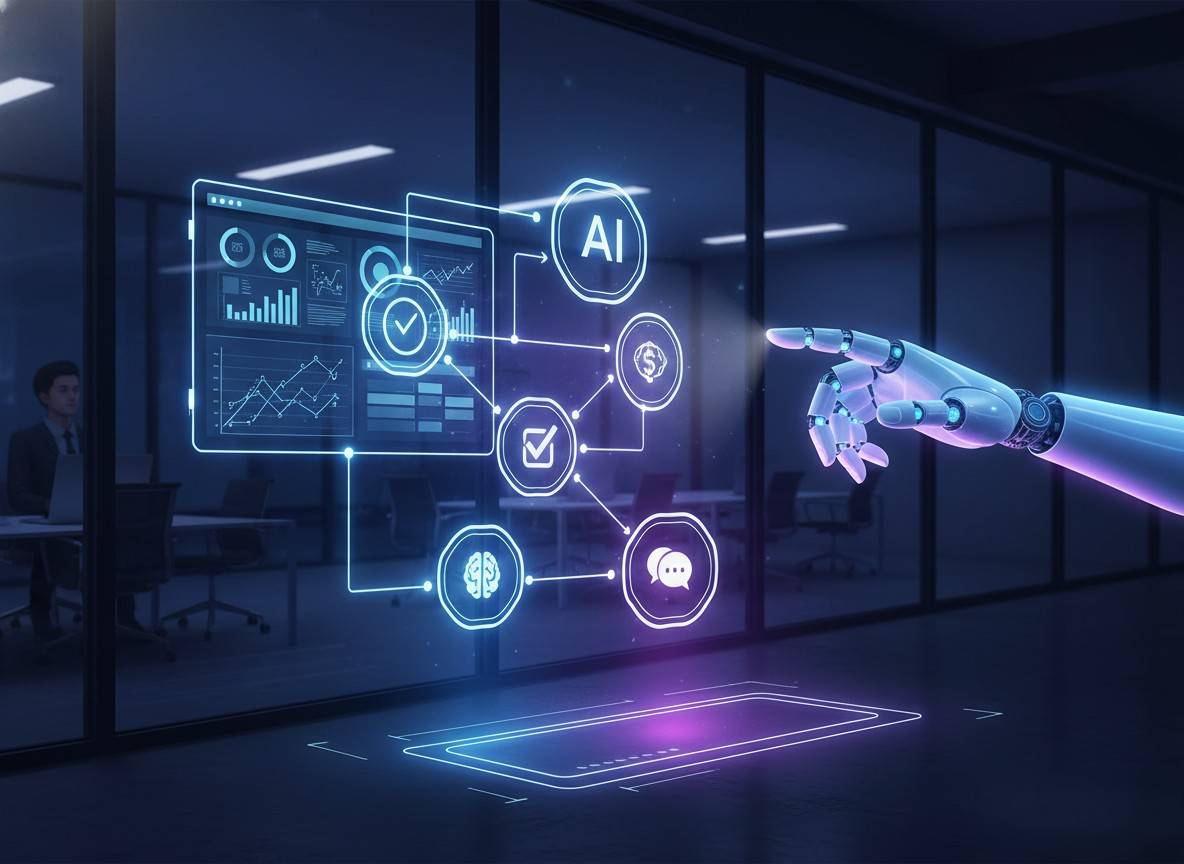
AI automation services are a need to every business. These make sure that things are much simpler to handle and there’s less room for errors. Then employees can focus on more important tasks at hand. But why are these services so powerful, and how can businesses get the most out of them? This article breaks all this down below.
What Are AI Automation Services?
AI automation services are basically tools that do tasks people usually handle. But they’re not your regular software. They do all the complicated work for you. For instance, they learn from the data, adjust when things change, and make decisions like humans would.
For example, when you think about having to update Spreadsheets every day, it probably sounds really boring and time-consuming. But these tools can save you from this worry by quickly collecting and analyzing data and making reports out of them in just seconds. So, not only do things get done faster, but mistakes drop too. Plus, everything keeps running smoothly. It’s almost like having a super reliable assistant who never gets tired and is always ready to help.
How Does AI Automation Help Business
Every business has tasks that slow down progress. Repeating the same actions over and over really drains your energy and slows progress. That’s where AI automation services are needed, as they:
- Take care of repetitive and time-consuming tasks for you.
- Tasks get done smoothly and makes sure the workflow is fast without any interruptions.
- Also, take care of insights and keep you updated using trends and real data.
How Workflow Automation Helps
Workflow automation makes sure tasks are taken care of and go from one stage to next really smoothly. If we talk about a customer sending a request, AI tools direct it to the right team without making them wait. This makes things less delayed, and they get taken care of without many mistakes, which improves the overall experience.
On top of that, automated workflows make managers see what’s going on overall and give them a clear view of everything. You can see which tasks are pending, which are complete, and what hurdles are coming in the way. This way, teams don’t have to micromanage and hover over small things.
Key Benefits of AI Automation Services
AI automation services are changing the way businesses get things done. Instead of employees spending hours on repetitive work, smart systems handle it for them. From startups to big enterprises, AI-powered automation keeps operations running smoothly and saves a lot of time and effort.
1. Increased Efficiency
Speed is where these automation services really shine. Tasks like updating spreadsheets, processing invoices, or creating reports that used to take hours can now be done in minutes. This repetitive work gets taken off your team’s plate, so they can focus on other important tasks.
On top of that, work gets done smoothly. Tasks move automatically from one step to the next, cutting down delays. Nothing gets stuck, and everything keeps flowing without constant follow-up.
The best part? Employees aren’t restricted and tied to boring and repetitive jobs anymore. They can spend time on what problem to solve, on planning, and creative thinking, which are the things that actually help a business grow. Suddenly, work feels less like a grind and more like progress.
2. Cost Savings
Now let’s talk about costs. One major reason companies turn to AI business automation solutions is so they can cut down on expenses and also perform well.
When repetitive work is automated, there’s no need for you to give inputs manually. So, when business process automation with AI is used, small errors and inefficiencies that can quickly add up are reduced. And that means you can save the cost of fixing those errors. It’s very useful for businesses.
Moreover, investing in an AI automation service provider probably feels like a big step at first, but it helps with long-term savings as there are fewer errors to be fixed.
3. Improved Accuracy
Another strong advantage is accuracy. AI systems are consistent as they don’t get tired or lose focus.
This is why AI process automation services are so effective when handling large amounts of data. Everything is processed the same way, every time.
As a result, businesses experience fewer errors and less need for constant checking or rework.
Over time, this level of reliability helps build stronger systems and reduces disruptions in daily operations.
4. Scalability
Growth sounds great, but managing it isn’t always easy. More customers, more data, more requests, it can quickly become overwhelming.
That’s where custom AI automation solutions come in. They’re built to handle increasing workloads without needing to constantly expand your team.
Whether you’re a startup or a large company, enterprise AI automation services allow your systems to grow alongside your business.
So instead of struggling to keep up, your operations stay stable and efficient—even as demand increases.
5. Data-Driven Decision Making
Let’s be honest, data can be confusing when you’re looking at it manually. It’s time-consuming, and important insights can easily be missed.
With AI automation consulting services, businesses can turn raw data into something useful. AI analyzes patterns, highlights trends, and presents insights in a way that actually makes sense.
Because of this, decisions are no longer based on guesswork.
You get clearer direction, better planning, and more confidence in your strategies—which is a huge win for any business.
6. Enhanced Customer Experience
On the customer side, expectations are higher than ever. People want quick responses and smooth interactions.
This is where AI automation for customer support really helps. Chatbots and automated systems can respond instantly, handle common queries, and guide customers without delays.
At the same time, these tools can personalize responses based on user behavior, which makes the experience feel more natural.
Meanwhile, your team isn’t overwhelmed with basic queries. They can focus on more complex issues, improving both service quality and customer satisfaction.
Common Applications of AI Automation Services
AI automation can transform almost every part of a business. Let’s look at real-world examples:
AI Automation for Customer Support
Chatbots handle questions around the clock. They answer common inquiries, provide product suggestions, and escalate tricky issues to humans. This reduces wait times and keeps customers happy.
AI Process Automation Services for Data Management
Tasks like data entry, cleansing, and analysis are automated. Businesses get accurate information faster, enabling smarter decisions. Manual errors drop, and teams spend less time fixing mistakes.
AI Automation for Sales and Marketing
AI tools can personalize campaigns, segment audiences, and predict behavior. Automated emails, for instance, can reach the right customers at the right time. This increases leads, conversions, and overall revenue.
AI Automation for HR
Recruitment, onboarding, and payroll processes are simpler with AI. It can screen resumes, schedule interviews, and track performance. HR teams spend less time on paperwork and more time supporting employees.
Supply Chain and Operations
AI optimizes inventory, predicts demand, and manages deliveries. Businesses avoid overstocking or stockouts. Costs decrease, and operations become smoother.
Challenges of Implementing AI Automation Services
Even with benefits, adopting AI has hurdles. Companies need to prepare for:
Integration with Existing Systems: Automation tools must work with current software. Choosing compatible platforms prevents workflow disruptions.
Data Privacy and Security: AI handles sensitive information. Companies must protect it and follow regulations to prevent breaches.
Change Management:Employees may resist new tools or processes. Clear communication, training, and support help teams adapt.
Cost of Implementation: There’s an initial investment in AI automation. Careful budgeting and ROI analysis ensure it’s worth the effort.
Ethical Considerations: Automation can impact jobs and decision-making. Businesses should address ethical issues and set clear safeguards.
How AI as a Service (AIaaS) Supports Businesses
AIaaS allows companies to access advanced tools without building them internally. Many businesses struggle with too many options, insufficient guidance, and constant changes.
Modern consulting firms help by:
- Deploying automation tools strategically
- Providing hands-on support
- Delivering measurable results aligned with goals
This approach ensures solutions are effective, scalable, and easy to maintain.
Solving Common AI Implementation Challenges
Most businesses face three key problems:
Too Many Tools Can Confuse Teams
A lot of businesses try too many automation tools at once. This can be confusing. Teams waste time switching between apps instead of getting work done. For example, imagine using three different tools for customer requests, email, and task tracking. It slows things down.
The key is to focus on the tools you actually need. Start with one or two. Test them first. Gradually, you can add more if needed. This keeps workflow efficiency high and prevents chaos. When teams know exactly what to use, business processes run smoother.
Prompt Fatigue Slows Work
AI tools work using prompts you give them, but having to write them repeatedly can tire you out. For example, if we take marketing teams, they spend hours adjusting the prompt to get the exact ad copies they need. That’s prompt fatigue.
The solution? start with templates or ready-made libraries. Not only do they save time, but they also keep results consistent, so you don’t have to constantly fix errors. Next, make sure your team knows how to give clear, straightforward instructions. This reduces confusion and keeps tools working the way they should.
Finally, the payoff is huge; your team can spend more time on the work that actually matters instead of guessing or troubleshooting. In other words, a little planning up front keeps everything running smoothly and makes everyone’s day less frustrating.
Updates Can Distract Teams
Tech moves fast. Updates keep coming, sometimes every week. It’s easy for teams to feel overwhelmed. Learning a new feature constantly? Exhausting.
The trick is simple: focus only on what actually helps. Don’t try to use every update at once. Work with providers who highlight the useful changes. Check in regularly. Decide what’s important now, and what can wait.
This way, you stay current without slowing things down. Teams stay productive. Tools actually make work easier, not harder.
How to Implement AI
Step 1: Map Existing Processes
First, see how work really happens. Note each step, and then spot repetitive tasks and any hurdles. This shows you where to start.
Step 2: Prioritize the Important Tasks
Next, focus on tasks that matter most. Like you can start small from data entry or simple customer requests. Quick wins build confidence.
Step 3: Design Scalable Solutions
Then, make sure your solutions can grow with your business. Use tools that fit with what you already have. This saves trouble later.
Step 4: Choose the Right AIaaS Platform
Also, pick tools that work well and offer support. Avoid complicated DIY systems as they slow you down.
Step 5: Monitor, Measure, and Optimize
Finally, track results. Look at time, errors, and costs. Make small changes as needed. Keep improving as you go.
How AI Streamlines Business Processes
Automation works best when applied smartly. Best practices include:
- Map reality, not theory
- Automate simple tasks first
- Integrate tools for smooth data flow
- Use AI to assist decisions, not replace humans
- Apply governance to maintain quality and security
Following these steps reduces manual work, improves efficiency, and empowers teams to focus on high-value tasks.
Why Businesses Should Care About AI Automation
AI automation isn’t just about saving time. It transforms businesses:
- Better operational efficiency
- Lower costs
- Improved customer satisfaction
- Smarter decision-making
- Scalable processes
In short, AI automation services give businesses a strategic advantage in competitive markets.
How to Get Started with AI Automation Services
To implement AI effectively:
- Identify tasks suitable for automation
- Choose tools that fit business needs
- Plan integration with current systems
- Train employees for smooth adoption
- Continuously monitor and optimize
With this approach, companies can maximize benefits and achieve a seamless transition.
Conclusion
AI automation services are reshaping how businesses work. They simplify processes, reduce errors, and enhance customer experiences. By adopting these services, companies gain a competitive edge and allow employees to focus on strategic priorities.
At Octet Solutions, we provide tailored AI automation services that fit your business. Our experts guide you through strategy, implementation, and optimization to ensure measurable results.
FAQs
1. What is the difference between AI automation and traditional automation?
Traditional automation follows strict rules and does exactly what it’s told. AI automation is smarter. It can learn, adapt, and handle more complex tasks. So, businesses get flexibility and faster results.
2. Can AI automation improve customer service?
Yes, it can. AI chatbots answer questions instantly, even after hours. They personalize responses and handle simple issues. Human agents can focus on harder problems, which makes customers happier.
3. Is AI automation expensive to implement?
It costs money at first, but the savings soon add up. AI reduces errors, saves time, and lowers operational costs. Over time, the investment usually pays for itself.
4. How does AI help in business decision-making?
AI quickly analyzes large amounts of data. It spots patterns and trends that humans might miss. This helps managers make faster and smarter decisions.
5. Can small businesses benefit from AI automation services?
Absolutely. Small businesses often have limited staff. AI handles repetitive tasks and frees employees for important work. It also helps businesses grow without extra costs.
6. How can AI automation improve team productivity?
By taking care of routine work, AI allows employees to focus on creative tasks. Teams feel less stressed. Projects move faster, and productivity improves naturally.
8. How long does it take to implement AI automation in a business?
It depends on the size and complexity of tasks. Small tasks can be automated in weeks. Larger workflows may take months. Planning and training make the process smoother.
9. What types of tasks are best for AI automation?
Tasks that are repetitive, time-consuming, or data-heavy work best. Examples are data entry, reporting, invoices, customer requests, and marketing campaigns.
10. How do businesses measure the success of AI automation?
They track efficiency, errors, and time saved. Other indicators are cost reduction and customer satisfaction. Regular checks help identify areas to improve.